The Italian Paradox: Why the Land of Pizza and Pasta Isn't Struggling with Obesity

Summary
- Italians maintain low obesity rates despite high carbohydrate consumption by focusing on balanced meals with fresh ingredients.
- Traditional Italian dishes emphasize vegetables, legumes, and olive oil, making them nutritious but not overly caloric.
- The Italian lifestyle includes walking, home cooking, and enjoying meals slowly, contributing to better health.
- Social dining and a relaxed lifestyle help reduce stress and promote overall well-being.
Carbohydrates have gotten a bad reputation in recent years. Many people battle with excess weight and the first thing they cut out in an attempt to slim down are various dough – pastries, bread, pizzas, and pastas. Most are convinced that these foods are the biggest culprits for weight gain. However, this might be a bit of an oversimplification. In fact, the relationship between certain types of food and weight gain is not that simple, and this is supported by very serious scientific studies – those that have attempted to find out which macronutrients and in what ratio are best or worst for weight loss. The result – any macronutrient ratio in the diet (carbohydrates, fats, proteins) can lead to weight loss, provided we ensure a caloric deficit, meaning we consume fewer calories.
Personally, I am an advocate of the saying “better to prevent than to cure”, meaning it's much better not to allow ourselves to gain excess weight at all. Proper and healthy nutrition in line with our energy needs and lifestyle is the secret to staying slim, but the recipe for this is not as simple as it sounds. For many, the problem is the fear that in the pursuit of a slimmer waistline and health, they will have to give up many foods they love.
However, enjoying delicious food daily without gaining extra weight is quite possible, and the best example of this is – Italians. We all know that Italy is the land of pizza and pasta, a paradise for dough lovers. So how come Italians are not the fattest nation in Europe, not even close? If the theory that carbohydrates are the main culprits for excess weight is true, then Italians defy it for some reason.
What is the secret to the slim figure of these pizza and pasta lovers?
What is the secret of Italians? How do they succeed? It seems that the answer is a bit more complex and not just about food choices, but also about the approach to food. In fact, our former neighbors cultivate a specific love for food that includes: simplicity (a small number of ingredients), balance (without overindulging in animal ingredients), and choosing high-quality and fresh plant ingredients as the cornerstone of many traditional dishes.
Besides the fact that many traditional Italian dishes rely on fresh vegetables, they often include legumes (beans, lentils, chickpeas) and always quality olive oil. This combination makes the dishes exceptionally nutritious but not overly caloric. Vegetables are full of fiber, which makes us feel full and prevents overeating. They are low-calorie foods but rich in vitamins and minerals, contributing to meal balance. Legumes contribute not only with fiber but also with protein content, and the crown of it all is olive oil with its healthy fats. Italians never miss adding a wealth of fresh herbs instead of heaps of salt to round off the flavor.
Animal products are generally not the center of traditional Italian dishes, but more of an addition. Pastas, pizzas, and breads are often on the menu, but in moderate portions and with an emphasis on the quality of the ingredients. Consuming carbohydrates in this way – within balanced meals full of fresh vegetables, fiber, proteins, and healthy plant fats, ensures they provide enough energy but do not contribute to obesity.
Rich selection of meat-free dishes in Italian cuisine
If we are to learn something from Italians, it could be – that vegetable-based dishes can easily be turned into seductive gastronomic experiences. Here are just a few examples of classic Italian dishes that are plant-based:
- Spaghetti Aglio e Olio – simple but tasty spaghetti prepared with garlic, olive oil, chili peppers, and fresh parsley
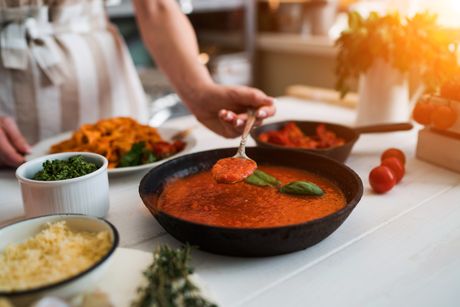
- Pasta al Pomodoro – pasta in tomato sauce with garlic, olive oil, and fresh basil
- Pasta e Fagioli – Hearty dish of beans and small pasta
- Pasta alla Norma – Famous Sicilian dish – pasta in tomato sauce with eggplant
- Pasta e ceci – Pasta in tomato sauce with vegetables and chickpeas
- Ribollita – Tuscan soup made of beans, greens, and stale bread
- Minestrone – Colorful soup with various vegetables and beans with added pasta
- Melanzane alla Parmigiana – Layers of eggplant in tomato sauce baked with Parmesan
- Farinata – Baked, thin and crispy dough made from chickpea flour (with added fresh herbs, and sometimes vegetables)
- Panzanella – Salad of tomatoes, cucumber, and onion with toasted stale bread (ciabatta) and vinaigrette dressing
- Caponata – Famous Sicilian vegetable dish (eggplants, tomatoes, onions, zucchini) with olives, capers, and olive oil
- Polenta with mushroom ragout - Italians love mushrooms (and picking them in the wild), especially in northern Italy combined with polenta
“La dolce vita”- Italian lifestyle contributes to low obesity
The Italian lifestyle, centered around balance, joy of living, and maintaining social connections, plays a significant role in low obesity rates. And what does that look like in practice? Well, the average Italian:
- Walks a lot every day – This is how they handle daily tasks, go to nearby shops, markets, cafes for socializing.
- Loves cooking from scratch – Home cooking, based on fresh and seasonal ingredients, is a pride of many Italians, and cooking is often a ritual around which family and friends gather.
- Enjoys meals slowly – Eating slowly, savoring every bite, reduces the chance of overeating.
- Often eats in company – Socializing over meals with loved ones strengthens social bonds and reduces stress levels.
- Loves a relaxed lifestyle – Successfully balancing work and private life prevents stress and contributes to better health.
The lesson we can learn from Italians is that carbohydrates are not the enemy when eaten the right way – paired with vegetables, legumes, and olive oil and prepared in a home kitchen with love. Secondly, that food is not just fuel – but an experience to be enjoyed slowly, preferably in the company of people we love. And finally, that it's a pity to waste precious time counting calories – instead, it's better to move as much as possible, finding each day a balance between work and enjoying leisure time.
Related news

Did You Know Diet Can Impact Arthritis? Science Links Gut Health and Inflammation to Joint Pain
Could Your Gut Bacteria Help Prevent Obesity? New Research Highlights Turicibacters Role
Why social medias fear of seed oils misses what science actually says about inflammation
Large studies reveal diet drinks with artificial sweeteners increase obesity risk despite zero calories
Plant Based House reserves all rights to the content. For downloading content, see instructions on the Terms of Use page.