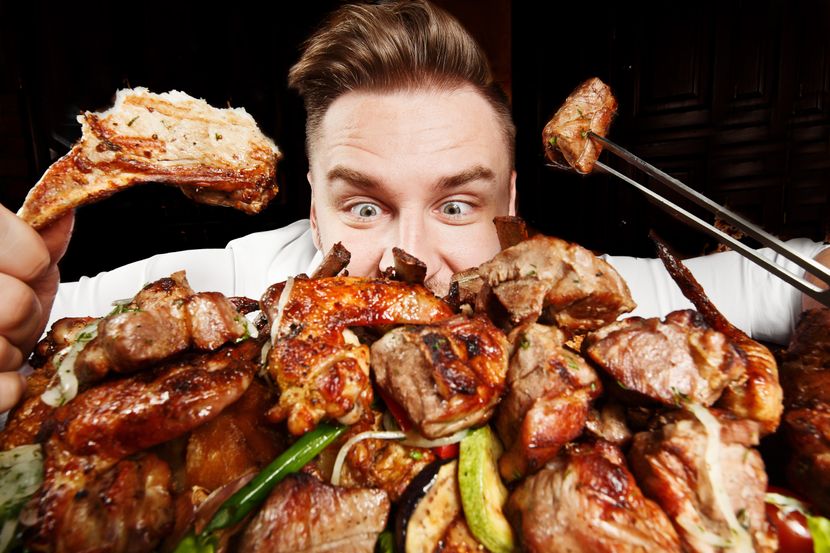
73% of Australian men would rather lose a decade of life than give up meat, study reveals entrenched views

Summary
- Younger adults understand the impact of food choices on climate but prioritize health and welfare over climate concerns.
- Men contribute 16% more greenhouse gas emissions than women, with societal norms influencing meat consumption.
- 41% of British omnivorous men are interested in plant-based diets but fear societal judgment.
A recent extensive study in Australia showed that most men believe a diet with more plant-based foods is not suitable for them as men, citing their perception of "masculinity" (whatever that means). To the researchers' surprise, these beliefs were so entrenched that an incredible 73% of respondents agreed with the statement that they would rather sacrifice 10 years of their life than stop eating meat!
New Research on Climate Awareness Among Young Adults
In the lead-up to the new climate summit, COP29, Frontiers in Nutrition published results from a study aimed at exploring awareness regarding the connection between the climate crisis and our food choices among the younger adult population. The choice of the target group seems very logical, as it is expected that younger people should be most interested in the future and the consequences of climate change.
The study authors decided to examine how food choices and awareness of the impact of these choices on the climate vary among respondents concerning their gender, level of physical activity, and other factors. The study included younger men and women (average age 28) with various lifestyles and diets. Among them, the majority were omnivores (mixed diet), followed by flexitarians (eat meat but try to reduce its portion in their diet), pescatarians (eat fish but no other meat), vegetarians (no meat but consume dairy and eggs), and vegans (only plant-based foods).
All study participants stated they understood what a personal carbon footprint is (CO2 emissions resulting from personal choices and lifestyle), as well as the impact of food choices on climate change.
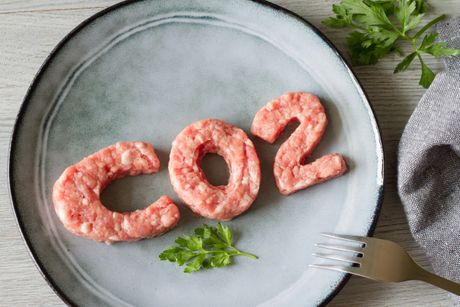
Study Conclusions: Awareness Exists, but Priorities Differ
Researchers concluded that life priorities and choices differ significantly between participants, especially concerning gender and level of physical activity. About 64% of participants were omnivores, and many highlighted a strong preference for meat in their diet.
Interestingly, most men who reported reducing meat intake (flexitarians) admitted they partly do so because they live with a partner (lest anyone think they do it of their own volition!). Most participants with a high level of physical activity also prefer animal products—reinforcing the preconception about the link between strength and meat consumption—with about 68% of those living this lifestyle being omnivores.
The smallest carbon footprint in this study was found among women who described themselves as "moderately active," and they showed the most environmentally conscious food choices. However, overall, the results showed that for the majority of women, food choices are more often motivated by health and animal welfare concerns rather than climate issues alone.
Meat Consumption and the "Masculinity" Trap
In an earlier study from 2021, it was calculated that men are, on average, responsible for 16% more greenhouse gas emissions than women. It is not particularly surprising that women are much more aware when it comes to food choices, nor that men show a greater preference for meat consumption. Therefore, it is no surprise that, for example, 79% of vegans in America are female.
However, a recent report from Britain showed something very interesting: as many as 41% of omnivorous men are interested in a plant-based diet. Unfortunately, concerns about health effects (perhaps fearing they will become weak without meat?) and fear of societal judgment—specifically mockery from their male peers—are the main factors preventing them from trying it.
It is more than obvious from all these studies that various societal preconceptions are indeed powerful. However, misconceptions and social norms do change, little by little, over time.
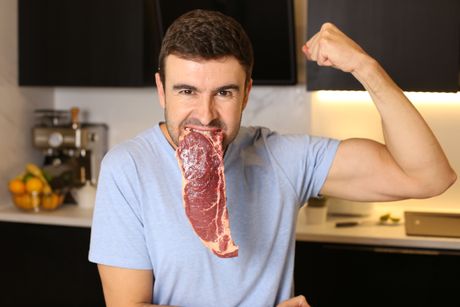
Moby’s Take: Protecting the Vulnerable is "Macho"
Many public figures contribute to this shift with their statements. Recently, addressing the perception of meat consumption as a symbol of "masculinity," the famous musician Moby voiced his opinion on Instagram.
He questioned how anyone could consider eating meat as an embodiment of masculinity or being a "macho" man, when it involves paying underpaid workers to kill completely helpless animals kept as prisoners. Killing the helpless, who have no chance to escape or defend themselves, hardly seems "macho" according to Moby. He believes that, on the contrary, protecting the defenseless is what should be associated with "real" men.
What readers are saying
Online discussions reveal that many find the study's statistics alarming but not entirely unsurprising. On forums debating the link between meat and masculinity, users often describe the refusal to give up meat—even at the cost of life expectancy—as a clear symptom of "fragile masculinity." One commenter noted that men who boast loudly about their meat consumption are often just seeking validation from peers to mask their own insecurities.
Regarding the social pressure mentioned in the article, men frequently share stories of being branded with derogatory terms like "soy boy" simply for choosing plant-based options. However, the consensus in these discussions is often that true confidence means not caring about such labels. As one user succinctly stated during a debate on social stigma: "I'm secure enough in my masculinity to eat what I want—eating meat won't make me manly".
Finally, echoing Moby's sentiment, many users are calling for a complete redefinition of strength. A common thread in these debates is the idea that "real men protect others," with many agreeing that protecting vulnerable animals is a far greater display of strength and "manliness" than exploiting them.
Ultimately, while the data shows many men are still trapped in the stereotype that eating meat defines their masculinity, the growing support for redefining these norms suggests that true strength lies in protecting the vulnerable, not in exploiting them.
Related news

Chers Youthful Secret: How a Plant-Based Diet Helps the Star Stay Energetic at Nearly 80
Meet Akashinga: The All-Women Anti-Poaching Unit Protecting Zimbabwes Elephants and Communities
The hidden trauma of meat industry workers: Emotional numbness, PTSD, and substance abuse
Stone Age diets revealed: Research shows early humans relied on plants more than meat for survival
Plant Based House reserves all rights to the content. For downloading content, see instructions on the Terms of Use page.