The hidden suffering behind every egg: What the industry doesnt want you to know about laying hens

Summary
- Eggs are marketed as a superfood, increasing demand and leading to industrial farming conditions.
- Hens experience physical suffering, including osteoporosis and debeaking without anesthesia.
- Once egg production declines, hens are slaughtered or discarded, often in poor conditions.
- Online discussions challenge the ethicality of egg production, promoting plant-based alternatives.
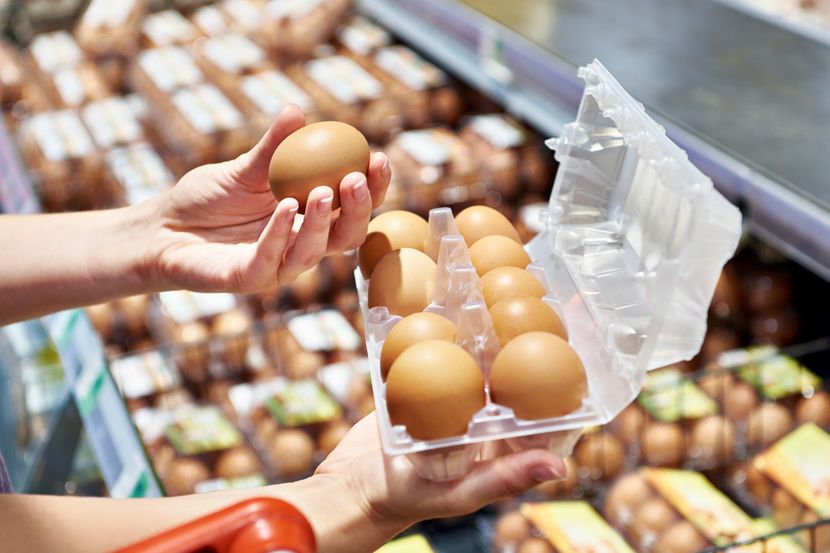
In recent years, eggs have been increasingly rebranded as the ultimate superfood. High protein, low carb, nutrient-dense – the egg has been "sanitized" and transformed into a symbol of healthy eating and fitness culture. Magazines, influencers, and nutritionists rush to praise this "perfect natural food," while supermarket shelves groan under stacks of cartons to meet the exploding demand.
But behind this demand lies an uncomfortable truth: the lives of millions upon millions of chickens suffering out of sight in the darkness of industrial farms. To keep up with consumption at the lowest possible cost, the industry has turned a living being—capable of feeling and suffering—into a biological egg-laying machine. It is a system built on confinement, cruelty, and premature death, operating only because marketing successfully convinces us that buying eggs is a healthy, even ethical, choice.
When we crack an egg open in our kitchen, we rarely stop to ask:
- Which chicken laid it?
- What kind of life did she have?
- And how much did that egg cost her?
This text is not meant to judge anyone, but to shed light on the reality of the egg industry. The goal is to help us make choices that align with our compassion and stand against cruelty. So, let’s peek into the uncomfortable truth about the suffering behind every egg and what happens to the chickens forced to "produce" them.
Problem 1: Denied Their Natural Instincts
Chickens are highly social and intelligent animals with complex instincts. When living freely in sanctuaries, they exhibit a wide range of natural behaviors:
- Building complex nests for their eggs.
- Dust-bathing to keep their feathers clean and skin healthy.
- Scratching and pecking the ground and grass for food.
- Establishing social hierarchies and forming friendships.
- Stretching, flapping their wings, and perching high up where they feel safe while resting.
In contrast, on industrial farms:
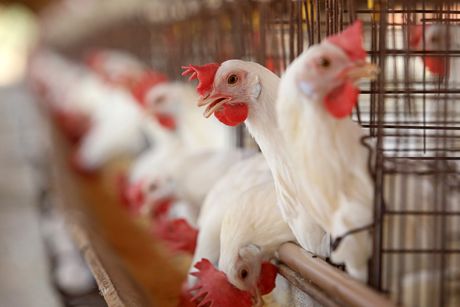
- 5–10 laying hens are crammed into cages, giving each bird a space no larger than 600 cm² (less than a standard A4 sheet of paper).
- No nests, no dust baths, no perches – the most basic natural behaviors are impossible.
- Even hens in "cage-free" systems are usually confined indoors with thousands of others in crowded, noisy sheds with poor ventilation, where natural behaviors are still largely suppressed.
Problem 2: Mental and Emotional Stress
Animal welfare scientists agree that chickens confined on industrial farms suffer from:
- Frustration: The inability to express natural behaviors leads to chronic stress, often resulting in feather pecking and even cannibalism.
- Learned Helplessness: Depression and resignation caused by long-term confinement in tiny spaces.
- Fear and Anxiety: Caused by overcrowding, rough handling, and manipulated light cycles designed to stimulate maximum egg production.
- Emotional Trauma: The result of mental and emotional stress repeated day after day, without end.
Problem 3: Physical Suffering and Trauma
The physical toll on laying hens in industrial settings is intense:
- Osteoporosis: Laying eggs almost every day depletes calcium reserves, leading to brittle bones and frequent, painful fractures.
- Debeaking: Beak trimming is performed without anesthesia, causing prolonged pain, nerve damage, and difficulty eating.
- Untreated Illness: Injuries, ammonia burns from waste accumulation, and respiratory issues due to poor air quality often go untreated.
Problem 4: When They Are No Longer Profitable
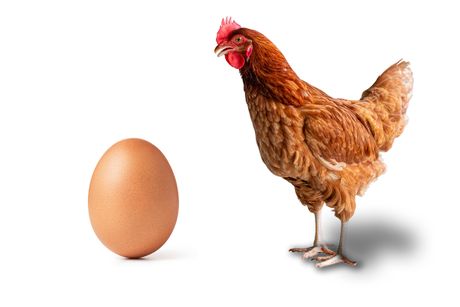
After just 12–18 months, an industrial hen’s egg production begins to decline. To the industry, this means only one thing: she is no longer profitable. Then comes the end. Most are sent to slaughterhouses, sold for a symbolic price, or even given away. Because their meat is considered low-quality, it is processed into soups, pâtés, sausages, or pet food. This end is particularly violent; hens are crammed into transport cages and exposed to harsh weather conditions without food or water.
Occasionally, smaller farms may offer "spent" hens for free to anyone willing to save them from slaughter. Unfortunately, these birds are often so physically and emotionally broken that they require intense care and rehabilitation—something few people or organizations can provide. The video below shares one such story. It shows what hens rescued from the egg industry really look like. Surprisingly, the rare few that find a happy ending often learn to trust humans again very quickly.
The Reality Check
Real discussions online show how learning about industrial egg production is shifting people’s perspectives. On platforms like Reddit, reactions to undercover footage range from shock to pure fury. As one user admitted after witnessing the conditions:
"Wish I hadn’t watched that, makes me so angry. The people responsible for this need to be held to account."
Others corroborate these horrors, sharing graphic details about weakened birds with broken legs and the hazardous air quality in barns. Crucially, online debates are increasingly challenging the "free-range" myth. Many users argue that these labels are often deceptive, hiding systems that still involve severe overcrowding and poor welfare. For many, discovering these realities is the turning point that makes them question whether any commercial egg production can truly be ethical.
What Can We Do?
Once we understand the life of a laying hen, it is hard to look at eggs in the same way. An egg is no longer just an item on a plate; it represents the suffering someone endured to put it there. But the good news is that we can choose differently.
We do not have to support an industry that treats animals as machines rather than living beings. There are many plant-based alternatives to replace eggs in cooking and baking. Saying goodbye to eggs—or at least significantly reducing their consumption—has never been easier.
- Every time we choose differently, we take a stand:
- For the hens that will never see the sky.
- For all those mercilessly discarded the moment they cease to be profitable.
- For the idea that food should nourish us without causing suffering to others.
None of us can do everything, but each of us can do something. We can start, for example, with breakfast…
Related news

Behind the Smile Lies Suffering: Why 67% of Captive Dolphins Die Before Age 10
Pigs Can Play Video Games and Solve Puzzles: Surprising Facts About Their Intelligence and Emotions
Plant Based House reserves all rights to the content. For downloading content, see instructions on the Terms of Use page.