Why Your Morning Blood Sugar May Be High Even With a Perfect Diet: The Surprising Role of Sleep

Summary
- Morning blood sugar levels often depend more on sleep quality than diet.
- The liver produces glucose at night, and poor sleep can lead to excess production.
- Sleep quality affects the bodys ability to remove excess glucose during the night.
- The morning hormonal wave can cause sugar spikes if sleep quality is poor.
- Improving sleep habits can help manage morning blood sugar levels.
One of the biggest challenges faced by people with insulin resistance or type 2 diabetes is the unpredictable morning blood sugar level. Many think that morning glycemia is just a “report” of what they ate the previous day: if you ate too many carbohydrates, the number will be high; if you skipped dessert, it will be low. Sounds logical, right?
However, researchers and educators from the organization Mastering Diabetes discovered that things are not that simple. After tracking patterns in thousands of people, they found that morning sugar often does not reflect what you ate the previous day. They noticed that people with the same menu can have differences of up to 4-5 mmol/l in morning values! The answer most likely lies in nighttime sleep and the processes that occur in our body while we sleep.

Three Nightly Processes That Determine Morning Blood Sugar
1. The Liver - The glucose factory that never sleeps
Even when you don’t eat, your liver continuously produces glucose to provide energy to the brain and organs. This is normal. However, in some people, this “production line” remains in overdrive and floods the blood with excess sugar during the night. Insulin has control over this process - but it seems that the liver “hears” the signal to stop producing glucose best in deep sleep. If sleep quality is poor, this mechanism fails.
2. Nightly “cleaning” of excess glucose
During sleep, the body has a “clean-up crew” that removes excess sugar from the bloodstream. If sleep quality is not good, this crew is late or doesn’t do the job properly - and you wake up with excess glucose, even though you didn’t eat anything wrong the night before. Here, the number of sleep hours is not as important as the quality of your sleep cycles.
3. The morning hormonal wave
About an hour before waking up, the body starts releasing hormones that prepare you for the day - giving you “fuel for the start.” This is a natural and healthy process. The problem arises when your cells don’t know how to properly handle this hormonal wave. Due to incorrect hormonal signals, the liver “thinks” that energy is urgently needed and pumps too much sugar into the blood before you wake up. If you had poor sleep, the cells become even more sensitive, making the sugar spike even higher.
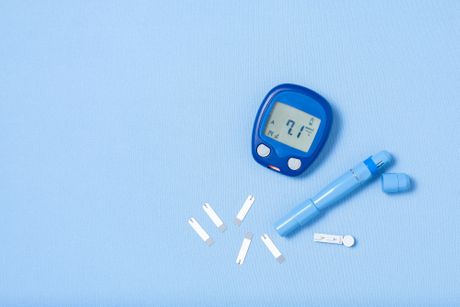
It’s Not Enough Just to Watch What You Eat
Common advice focuses solely on diet: counting carbohydrates and avoiding sugar. While important, morning sugar often depends more on sleep quality than on dinner. In other words: you can eat perfectly and still wake up with high blood sugar values if your sleep was disrupted.
How to Improve Morning Glucose Values?
- Establish a regular sleep rhythm - Go to bed and wake up at the same time every day.
- Reduce blue light exposure - Avoid screens at least an hour before bed.
- Optimize your environment - Pay attention to temperature and silence in the bedroom.
- Avoid late heavy meals - Alcohol and large dinners late at night disrupt deep sleep phases.
- Address sleep disorders - If you suspect sleep apnea or snoring, consult a doctor, as these are major drivers of morning glucose spikes.
Morning blood sugar is not just a consequence of what we eat, but also the result of how we sleep. Three key processes - liver function, nightly “cleaning” of glucose, and response to the morning hormonal wave - depend entirely on sleep quality. Next time you wake up with unexpected numbers, remember: the problem might not be on your plate, but in your bedroom.
Related news

This tea is considered the best drink against insulin resistance: Here's why
Overcome insomnia naturally: The importance of magnesium and plant-based sources that are a savior
Vegan and vegetarian diets linked to 36 extra minutes of sleep and nearly 90 percent excellent sleep ratings
Up to Four Cups a Day: Coffee Linked to Lower Heart Disease and Stroke Risk in Over 1.6 Million People
Plant Based House reserves all rights to the content. For downloading content, see instructions on the Terms of Use page.