
Top Neurologists Reveal 9 Daily Foods for Optimal Brain Health and Cognitive Longevity

Summary
- Fewer than 10% of dementia or Alzheimers sufferers carry genes responsible for early-onset forms of these diseases.
- Brain health can be preserved into old age through diet, exercise, relaxation, and quality sleep.
- Key foods for brain health include green leafy vegetables, whole grains, seeds, legumes, berries, cruciferous vegetables, nuts, green tea, and herbsspices.
For most of us, when we think of brain health, the first association is usually mental illness. When it comes to dementia or Alzheimer's disease, many still believe that these conditions are purely the result of genetics. We often think that if fate has dealt us a bad hand, there is no chance of avoiding them in old age—it’s only a matter of when.
While genes for these diseases do exist, recent research shows that fewer than 10% of sufferers carry them (specifically, the genes responsible for early-onset dementia or Alzheimer's).
Even many doctors tend to neglect brain health. A renowned neuropsychiatrist recently stated in an interview: "Psychiatrists are the only doctors who treat an organ (the brain) without ever seeing it." He was alluding to the fact that therapy and medication are often prescribed without prior brain scans, basing treatment solely on external symptoms. He explained that brain imaging can reveal the true state of our health—for example, the brains of heavy drinkers regularly show signs of shrinkage, signaling poor health long before severe symptoms appear.

Science has proven: We can preserve cognitive function well into old age
Top neurologists and researchers, husband-and-wife team Dean and Ayesha Sherzai (@braindocs), believe that everyone can achieve optimal brain health. They did not reach this conclusion by chance, but based on years of rigorous research involving thousands of patients.
The Sherzais are directors of the Alzheimer's Prevention Program in California, where they have led the largest brain health and vitality research program in America. They help their patients incorporate protective methods into their daily routines, preserving brain function well into old age. They summarized their findings in their book, The 30-Day Alzheimer's Solution: The Definitive Food and Lifestyle Guide to Preventing Cognitive Decline.
Drs. Sherzai emphasize that memory is not just about "remembering things"; its role is much more complex. A well-functioning memory allows us to be focused and fully "immersed" in everyday experiences. With good memory at any age, we have the chance to be the happiest and best version of ourselves.
They have even created an online masterclass to teach memory optimization techniques, asserting that we can train the brain like a muscle. However, they always emphasize that the foundation is overall brain health—something we must nurture throughout our lives, not just when we notice the first signs of decline.
Nutrition for optimal brain health
For a vital brain, good blood circulation is crucial—not only in the main arteries but also through the miles of tiny capillaries (the brain contains over 400 miles / 640 km of blood vessels!).
For good circulation, we need healthy blood vessels free of blockages. It is a little-known fact that the most common form of dementia is vascular dementia, a condition where cognitive functions degrade due to poor vessel health and reduced blood flow.
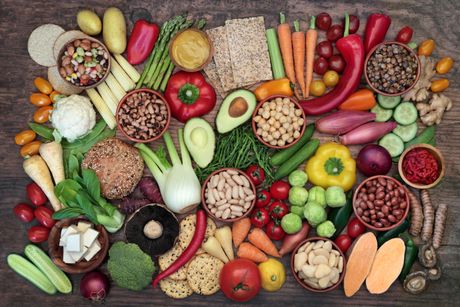
Besides regular exercise, relaxation, and quality sleep, proper nutrition is a key element in preserving brain health. Researchers agree that the best results come from a diet dominated by unprocessed plant foods—fruits, vegetables, grains, legumes, seeds, and nuts.
From the Sherzai doctors' program, we bring you recommendations for 9 groups of foods that are so critical for the brain that they recommend consuming them every day:
- Green Leafy Vegetables: various lettuces, arugula, mache, kale, chard, spinach.
Recommended: 2-3 cups fresh or 1-1.5 cups cooked daily.
- Whole Grains: Oats, quinoa, brown rice, buckwheat, barley
Recommended: 3 servings daily (1 serving = 1/2 cup cooked oatmeal, rice, buckwheat, or whole grain pasta).
- Seeds: Especially ground flaxseeds and chia seeds
Recommended: 2 tablespoons daily.
- Legumes and Soy Products: Beans, chickpeas, hummus, lentils, edamame, tofu, tempeh
Recommended: 3 servings daily (1 serving = 1/2 cup cooked beans, lentils, tofu or tempeh; 1/4 cup hummus; 1/2 cup peas).
- Berries: Blueberries, strawberries, blackberries, raspberries
Recommended: 1/2 cup daily.
- Cruciferous Vegetables: Broccoli, cabbage, kale, cauliflower, Brussels sprouts, bok choy
Recommended: 1 cup daily.
- Nuts: Walnuts, almonds, cashews...
Recommended: 1/4 cup or approx. 30g daily.
- Green Tea
Recommended: At least 1 cup daily.
- Herbs & Spices: Turmeric, oregano, thyme, rosemary, sumac, cloves, saffron
Recommended: At least 1/4 teaspoon daily.
Finally, a question for you... If you had to choose between two options:
- Do you want a brain that functions optimally for as long as possible?
- Or do you want a brain that functions "somehow," for as long as it lasts—leaving it to chance?
Which would you choose? I choose to do everything I can to help my brain function at its peak for as long as possible. And you?
Related news

Groundbreaking Study Shows Plant-Based Diet Cuts Mortality by Up to 24% for Chronic Disease Patients
Why Women Face Nearly Double the Alzheimers Risk: Its Not Just About Living Longer Anymore
Adding 50g of Walnuts to Breakfast Shows Immediate Brain Benefits, Says Study
How a 30-Minute Walk or 40 Minutes of Intense Exercise Can Boost Your Brains BDNF Levels by 32%
Plant Based House reserves all rights to the content. For downloading content, see instructions on the Terms of Use page.