Why the Hardest Part of Veganism Isn’t Giving Up Cheese — It’s What You Can Never Unsee Again

When people hear the word "vegan", the first reaction is usually a mix of curiosity and sympathy, followed by the inevitable question: “But… what do you eat?”
Most non-vegans worry about protein intake or assume that the most difficult challenge is giving up meat, eggs, and cheese. In a culture where social life often revolves around animal-based foods, it is easy to assume that dietary restrictions are the biggest hurdle.
But no, that is not the hardest part. Not even close. The hardest part is this: once you open your eyes to the reality behind the food on your plate—you can never close them again.
Once You See the Reality, You Can Never Unsee It
You become painfully aware of the enormous suffering of animals that happens every day, worldwide, and all around us.
Skeptics might immediately argue: “But people suffer too.” Yes, humans suffer, and we notice that. But animal suffering is different—it is systematic, institutionalized, and inflicted in enormous numbers upon beings who suffer in silence, unable to protest against the injustice. Meanwhile, most of society lives with a blindfold on, protected from seeing this reality, taught from birth that using animals is necessary, normal, and natural.
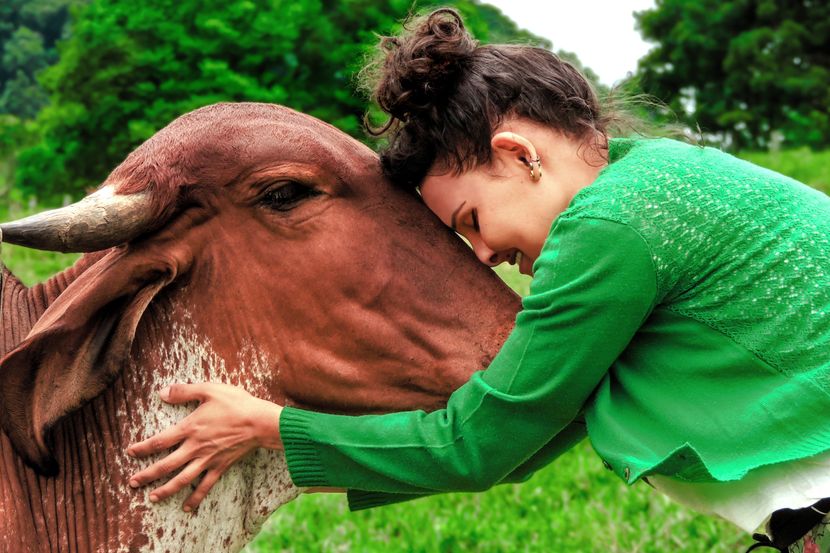
However, the moment a vegan becomes “truly aware” of the extent of this industry, the world looks different. Suddenly, trucks on the highway aren't just transport—they are vessels of fear. The smell of grilled meat no longer signals a meal, but a loss of life. You look at a calf not just as an animal, but with deep compassion, knowing its likely fate. And there is no way to go back and put the blindfold on again.
This shift in perspective can lead to a sense of isolation. It is easy to feel disconnected from friends and family who casually accept a reality that now seems terrifying to you. At times, a deep sense of hopelessness may set in—the fear that nothing will ever change. And on top of that, there is the looming shadow of the climate crisis.
Veganism: Much More Than a Diet
Many believe veganism is simply a diet list—no meat, no dairy, no eggs. However, it is much more than that. As defined by The Vegan Society, it is: “A philosophy and way of living which seeks to exclude, as far as is possible and practicable, all forms of exploitation of, and cruelty to, animals for food, clothing, or any other purpose.”
Veganism is not just about what is on your plate; it is an ethical stance. At its core is the rejection of the idea that animals exist for humans to use, kill, or exploit for profit and taste. It is a movement rooted in justice and compassion, driven by the belief that all living beings have the right to live freely.
Reinventing Yourself
Becoming vegan inevitably brings change. Yes, you change what you eat three times a day. But you might be surprised by how easy that part becomes when you have strong motivation. You learn new cooking methods and discover ingredients you never noticed on supermarket shelves before.
But the real change happens internally. When you open the door to compassion, something deeper shifts. You begin to view life differently. You start to value experiences, connection, and inner peace more than material possessions or societal approval. When your priorities shift towards justice and the protection of the vulnerable, superficial things lose their importance.
For many, this path becomes deeply spiritual (in a non-religious sense) because of the newfound sense of connection—with nature, animals, and oneself.
What people are saying
Online discussions reveal the deep emotional toll of awareness, where the knowledge of systematic cruelty often leads to feelings of despair. Users describe a struggle with "survivor's guilt," finding it difficult to enjoy everyday comforts or personal achievements, noting: “I feel like I shouldn’t allow myself any joy or pleasure while so many others are suffering.”
Conversely, there is a strong call for patience and understanding toward those just starting their journey. Members urge the community to avoid mocking curious newcomers and instead educate them with kindness, reminding fellow vegans to “be compassionate to others so that they extend their compassion to the voiceless victims.”
The Other Side of the Story: The Beauty of Connection
Yes, being vegan carries the weight of awareness. We carry images we cannot erase and sometimes a feeling of loneliness. But this path also opens your heart to some of the most beautiful experiences a human being can have.
You will feel more connected than ever—not just with animals, but with the planet and your own deepest values. You will meet people who share your vision, often forming rare and deep friendships based on shared empathy. And you will find comfort in knowing that, to the best of your ability, you are doing everything you can to reduce harm.
Maybe we cannot change the whole world at once. But each of us can change our world—plate by plate, decision by decision. And when we do that, we show others that compassion is not a weakness, but the greatest strength we have.
That is what gives us hope that tomorrow might be different.
Plant Based House reserves all rights to the content. For downloading content, see instructions on the Terms of Use page.