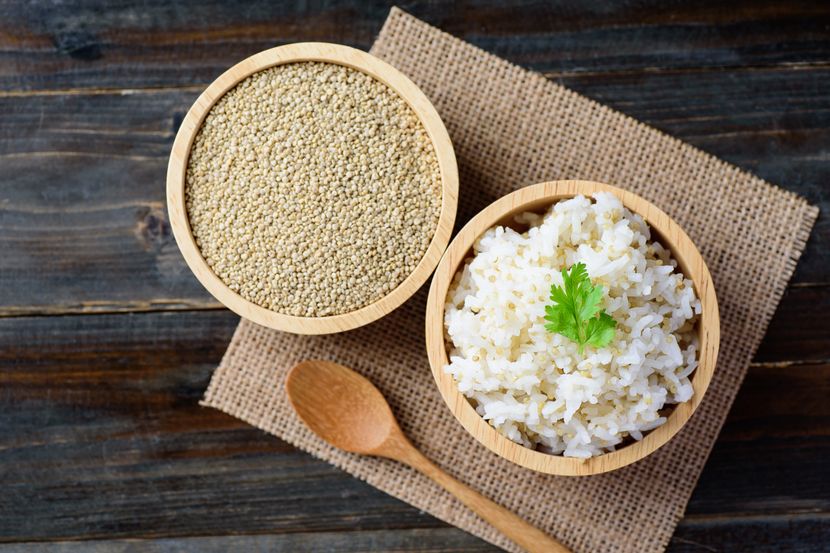
Quinoa vs Rice: Which Gluten-Free Staple Packs More Protein, Fiber, and Micronutrients Per Serving?

Summary
- Quinoa is a South American seed with high fiber, protein, vitamins, and minerals, offering steady energy release and stable blood sugar levels.
- Rice is a global staple, available in various types, providing quick energy and nutrients like manganese, selenium, and niacin.
- Quinoa is slightly healthier than rice due to its nutritional richness and ability to maintain stable blood sugar levels.
- Both quinoa and rice can be used interchangeably in recipes, though quinoa cannot replace rice in dishes requiring starch.
- Cooking quinoa with lemon, garlic, and vegetables enhances its flavor and can be served warm or cold.
While quinoa and rice may appear alike due to their neutral flavor and similar culinary uses, they originate from separate plant families and have distinct health benefits. Both foods are commonly ground into flour and serve as popular gluten-free alternatives to wheat-based products. However, quinoa, a South American seed from the amaranth family, is not a true grain, unlike rice, which is a staple cereal grown worldwide.
Nutritional Insights
Quinoa stands out for its slightly nutty flavor and its substantial content of fiber, protein, vitamins, and minerals. It is found in several types, with white being the most common, but red and black varieties are also available. Nutritionists highlight that quinoa should be viewed as a source of carbohydrates, but with added benefits. Its carbohydrates release energy steadily, minimizing blood sugar spikes due to the presence of fiber and protein. Essential micronutrients like iron, copper, zinc, and folic acid are also present.
A typical 50-gram serving of quinoa contains 170 kcal, 2.5 grams of fat (with no saturated fat or cholesterol), 29 grams of carbohydrates, 3 grams of fiber, 6 grams of protein, and 2 grams of sugar, along with 19.8 mg of calcium and 1.8 mg of iron.
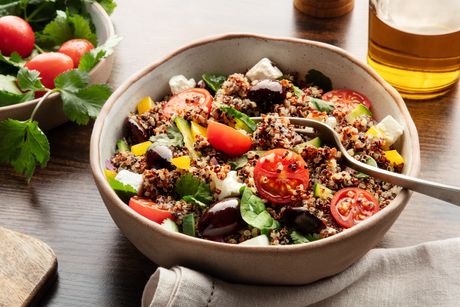
Rice, on the other hand, is a global staple with varieties such as white, brown, red, black, wild, and even purple rice. Long-grain brown rice is often recommended for its nutritional benefits. It delivers a quick energy source and provides micronutrients like manganese, selenium, and niacin (vitamin B3). Whole grain and darker rice types offer more fiber and additional nutrients compared to refined white rice.
Per 50-gram serving, rice offers 183 kcal, 1.7 grams of fat (zero saturated fat and cholesterol), 38 grams of carbohydrates, 1.5 grams of fiber, 3.1 grams of protein, no sugar, 4 mg of calcium, 125 mg of potassium, and 0.9 mg of iron.
Which Is Healthier?
Dietitians agree that both of these foods can be part of a healthy diet. Alternating between the two can help maintain variety in meals. However, quinoa is slightly healthier as it surpasses rice in maintaining a more stable blood sugar level and nutritional richness because it contains additional fibers, proteins, vitamins, and minerals. For those who enjoy both, quinoa can be given preference from time to time, but rice remains a valid choice, especially when paired with other nutritious foods to balance the meal.
Substituting Quinoa for Rice in Cooking
Yes, it is generally possible to use quinoa instead of rice in most recipes. Its delicate taste allows it to complement a wide array of dishes, from stews and curries to soups and stir-fries. Cooking quinoa in vegetable broth and finishing it with lemon juice and fresh herbs can enhance its flavor.
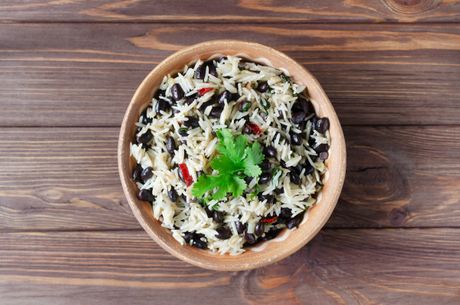
Since white rice and quinoa require about the same cooking time (around 20 minutes), they can be nicely mixed and cooked together. This combination creates a visually appealing and flavorful side. A recommended ratio is two parts rice to one part quinoa, occasionally adding some brown quinoa for variation. However, since quinoa is not as starchy as rice, it cannot replace rice in dishes that rely on rice starch to bind them, such as creamy risotto or crispy rice cakes.
Simple Quinoa with Lemon, Garlic, and Vegetables
For a straightforward and tasty way to enjoy quinoa, prepare it with vegetables, garlic, and lemon juice. Use 1 cup quinoa, 2 cups water or vegetable broth, 1 tablespoon olive oil, 1-2 garlic cloves, diced zucchini and red pepper, half a teaspoon salt plus pepper to taste, juice of half a lemon, and 2 tablespoons chopped fresh parsley or basil.
Start by boiling the water or broth and adding the rinsed quinoa. Cook for about 15 minutes until the liquid is absorbed. In a separate pan, sauté garlic in olive oil, add the vegetables, and cook until softened. Mix in the cooked quinoa, season, and finish with lemon juice and herbs. This dish can be served either warm or cold.
To boost the protein content, you can add proteins like canned chickpeas. For extra texture, sprinkle in roasted nuts or seeds of choice.
Conclusion
Quinoa and rice each have their place in a balanced diet. While quinoa offers a nutritional edge, both foods can be used interchangeably in many recipes, supporting diverse and healthy meal planning.
Related news

Discover the Comfort of Creamy Quinoa, Lentil, and Spinach Casserole-No Dairy Required
Discover the Greek Secret to Satisfying Plant-Based Meals With Fasolakia Stewed Green Beans
Make the best "meatballs" from any type of legumes: This is a universal recipe
How Mung Beans Became a Global Staple: Nutrition, Versatility, and Plant-Based Innovations Explained
Plant Based House reserves all rights to the content. For downloading content, see instructions on the Terms of Use page.